
Large trucks navigating city streets pose a serious danger to everyone around them. These massive vehicles require enormous space to turn, creating dangerous blind spots where drivers can easily miss pedestrians, cyclists, and smaller vehicles. The sheer size of these trucks means that even a small mistake can have devastating consequences for anyone caught in their path. Wide turn truck accidents are among the most dangerous types of traffic accidents on Washington, DC’s roads.
When these accidents happen, the results can be life changing. Victims often face severe injuries, mounting medical bills, and complex legal challenges. Understanding your rights becomes crucial in these moments, as the difference between full compensation and financial ruin can depend on quick, informed action. Seeking expert legal help from a trusted truck accident lawyer immediately can protect you and ensure responsible parties are held accountable for their actions.
Have you or a loved one been injured in a wide turn accident in Washington, DC? Contact Regan Zambri Long today, and one of our attorneys will get in touch personally for a free consultation. We’re available 24/7, and there’s no fee unless we win your case.
Complete this form and our team will get back to you as soon as possible




The deadly mechanics of wide turn collisions stem from basic physics that many people don’t understand until it’s too late. A fully loaded commercial truck weighs up to 80,000 pounds and requires a turning radius of 55 feet or more to complete a standard right turn. This means the truck must swing wide into adjacent lanes or even onto sidewalks to avoid hitting fixed objects like buildings or parked cars. During this maneuver, the truck creates dangerous blind spot zones extending more than 20 feet in multiple directions where the driver cannot see pedestrians, cyclists, or smaller vehicles.
The “squeeze play” represents the most common and deadly type of wide turn truck accident. This occurs when a vehicle, pedestrian, or cyclist is positioned on the right side of a truck that begins turning right. As the truck’s trailer swings wide, it can crush anything caught between it and the curb, building, or other fixed object. The truck driver often has no idea that someone is being crushed until after the accident occurs because these victims are completely invisible in the truck’s blind spots.
Several types of wide turn truck accidents regularly plague Washington, DC’s streets. Right-hook collisions happen when trucks turn right and strike vehicles traveling alongside them or pedestrians crossing legally in crosswalks. Pedestrians and cyclists represent the most vulnerable road users because they have no protection when struck by thousands of pounds of moving metal. Left turn accidents across traffic create multi-vehicle collisions at busy intersections, while secondary impacts occur when the initial collision pushes vehicles into other traffic or fixed objects.
Washington, DC’s unique urban landscape creates specific high-risk locations where wide turn truck accidents occur more frequently. With its narrow streets inherited from colonial times, the downtown grid system forces trucks to make dangerous maneuvers just to navigate basic turns. Key danger intersections include 14th Street and Constitution Avenue, Connecticut Avenue and K Street, and various points along the H Street corridor where commercial traffic mixes with pedestrians, cyclists, and passenger vehicles in confined spaces.
Construction zones throughout DC present additional hazards because altered traffic patterns can confuse truck routing and force unexpected turning maneuvers. School zones create particular dangers because children are unpredictable around large vehicles and may not understand the extensive blind spots that trucks create. Commercial delivery areas in business districts see frequent truck turning accidents as drivers attempt to access loading docks on streets not designed for large vehicle navigation.
Most wide turn truck accidents in Washington, DC are caused by a combination of driver errors and negligence. The most common mistakes include failing to check mirrors or blind spots before and during turns, driving too fast for the conditions or the truck’s size, signaling too late or not at all, and being distracted by cell phones, GPS devices, or other electronics. Fatigue also plays a big role, impairing a driver’s judgment when making split-second decisions about whether there is enough space to complete a turn safely.
Many truck drivers are not familiar with DC’s unique street layout, which features narrow, colonial-era roads, tight intersections, and heavy pedestrian traffic. Drivers used to highways or suburban streets often misjudge turning space, traffic patterns, or local laws, resulting in last-minute maneuvers that increase accident risk.
Trucking companies and employers contribute to these accidents through inadequate training and planning. Many companies provide minimal instruction on urban driving, blind spot awareness, or how to handle wide turns in tight areas. Pressure to meet tight delivery schedules leads drivers to rush turns or take unnecessary risks. Poor route planning can send large trucks through streets where safe turns are impossible, and negligent hiring practices may place drivers with little city-driving experience behind the wheel.
Environmental and infrastructure factors in DC add further challenges. Narrow streets, limited turning space, and intersections not designed for large commercial vehicles force trucks to encroach on sidewalks, bike lanes, or opposing traffic lanes. Construction zones with temporary traffic patterns can confuse even experienced drivers, while rush-hour congestion creates pressure for aggressive maneuvers.
Weather conditions like rain, snow, or ice reduce visibility and increase stopping distances, making wide turns even more dangerous. Poorly designed intersections that limit sight lines or turning space compound these risks.
Washington, DC has complex laws that govern commercial trucks and who’s at fault in wide turn accidents. Federal rules set standards for truck operations across the U.S., including proper signaling, safe turning speeds, driver training, and limits on how long drivers can operate before rest. Many trucking companies fail to follow these rules properly.
In DC, local laws add extra protections for pedestrians and cyclists. Trucks must yield to people in crosswalks and follow restricted routes or turning rules, though enforcement isn’t always consistent.
DC’s contributory negligence rule makes legal claims tricky: if a victim shares any responsibility for an accident, even a small amount, they may not recover any compensation. Because trucks are so large and dangerous, drivers have a higher duty of care, and courts often give pedestrians extra protection in crosswalks. Insurance companies frequently use this rule to minimize payouts, arguing that victims were partly at fault.
Liability in wide-turn accidents can involve multiple parties:
Driver errors, company negligence, equipment issues, and unsafe road conditions often cause wide-turn accidents. Victims need skilled legal help to navigate DC’s strict rules and identify all parties who may be liable.
Critical evidence must be collected quickly in wide-turn truck accidents before it’s lost or destroyed. Immediate scene evidence, like vehicle positions, damage patterns, skid marks, debris, and impact points, can show how the accident happened and who was at fault. Traffic signal timing and intersection layouts also help establish whether the truck driver failed to yield or broke right-of-way rules.
Digital evidence is increasingly important. Most trucks have Electronic Logging Devices that record speed, braking, and steering before and during accidents, showing whether the driver was speeding, inattentive, or made unsafe maneuvers. GPS and routing data can reveal if drivers took shortcuts through streets unsuitable for large trucks. Surveillance cameras, dashcams, and cell phone records can provide visual or activity-based proof of distraction or negligence.
Documents from trucking companies can uncover patterns of negligence. Driver training and qualification files show whether the driver was prepared for city streets. Maintenance logs reveal if safety equipment was faulty or ignored. Company safety policies and violation histories demonstrate whether safety was a priority.
Expert witnesses play a key role. Accident reconstruction specialists use physics and modeling to explain how accidents occurred. Trucking experts clarify proper safety standards and violations. Medical professionals document injuries and long-term care needs, while economic experts calculate financial impacts like lost wages and medical costs. Human factors specialists analyze driver behavior and decision-making to show preventable mistakes.
Trucking insurance companies use aggressive tactics to limit payouts. They quickly gather evidence, take witness statements, and make early lowball settlement offers. Shared fault arguments are common, trying to blame victims under DC’s strict contributory negligence rules. Complex insurance policies can further delay compensation and confuse victims.
Wide turn truck accidents often cause some of the most severe injuries in traffic collisions because of the enormous size and weight of commercial trucks compared to cars, bikes, and pedestrians. Victims can suffer crushing injuries when pinned against curbs, buildings, or parked cars, resulting in broken bones, internal organ damage, and severe soft tissue trauma that often requires multiple surgeries and long-term rehabilitation.
Traumatic brain injuries and spinal cord injuries, including paralysis, are common, even in collisions that may seem minor. Motor vehicle crashes account for 50% of all traumatic brain injuries, including crashes involving cars, trucks, motorcycles, bicycles, and pedestrians. They are also the leading cause of spinal cord injuries, making up more than 37% of all cases. Victims also frequently experience multiple fractures, deep cuts from debris or glass, and, in the most serious cases, wrongful death.
DC law allows victims to recover full compensation for both economic and non-economic losses. Economic damages cover medical bills, long-term care, rehabilitation, lost wages, reduced earning capacity, property damage, and costs for home modifications or assistive equipment. Non-economic damages compensate for pain and suffering, loss of enjoyment of life, and emotional trauma. Families may also recover loss of consortium damages when injuries affect relationships, companionship, or support.
Punitive damages may be awarded if trucking companies acted with gross negligence or willfully ignored safety, prioritizing profits over public safety. Commercial truck insurance typically carries much higher coverage than standard auto policies, often ranging from $750,000 to $5 million, with additional umbrella or excess coverage for catastrophic cases. Multiple liable parties, including drivers, trucking companies, equipment manufacturers, and even government entities, can increase total compensation.
Insurance companies aggressively defend these claims to limit payouts, making experienced legal representation essential. Because DC has a limited timeframe to file personal injury claims, it’s crucial to consult an attorney promptly to protect your rights and maximize recovery.
Multiple insurance policies and coverage disputes often complicate compensation recovery. Specialized legal expertise is needed to navigate the intersection of personal injury law and federal commercial vehicle regulations.
Wide turn truck accident cases are legally complex and require attorneys with specialized knowledge of both personal injury law and federal trucking regulations. Commercial vehicle laws cover driver qualifications, vehicle maintenance, cargo securement, and operational procedures, and violations can significantly affect liability. Major trucking companies and their insurers have highly experienced legal teams that use aggressive strategies to shift blame, downplay injuries, and limit payouts. Without equally skilled representation, victims face serious disadvantages.
Regan Zambri Long brings nearly three decades of experience handling wide-turn truck accidents in Washington, DC. Our immediate investigation ensures crucial evidence is preserved within 24 to 48 hours, often uncovering information missed or concealed by trucking companies. We work with a trusted network of expert witnesses, including accident reconstruction specialists, trucking professionals, medical experts, and economic analysts, to demonstrate the cause of accidents and the full extent of damages.
Our approach includes:
We have a proven record of significant recoveries, with more than $1 billion in settlements and verdicts secured for personal injury clients. This record demonstrates our ability to successfully challenge major trucking companies and their insurers in complex, high-stakes cases.
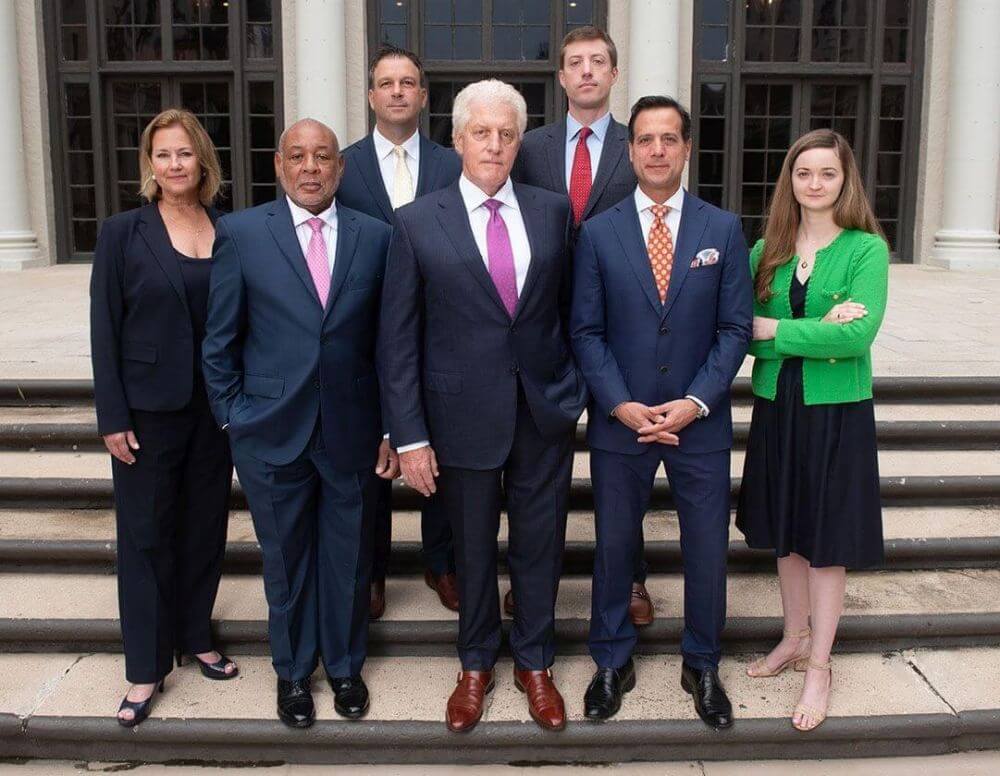
Our team includes some of the most prominent personal injury lawyers in the United States. All six partners are listed among Lawdragon’s 500 Leading Plaintiff Consumer Lawyers, and senior partner Salvatore Zambri has been named to their prestigious 500 Leading Lawyers in America list. Senior partner Patrick Regan is a Fellow of the International Academy of Trial Lawyers, an invitation-only honor society limited to 500 of the top trial lawyers in the nation. Salvatore Zambri, Patrick Regan, and Paul Cornoni are also recognized among the Top 100 Super Lawyers in Washington, DC, and Best Lawyers has consistently named Regan Zambri Long among the Best Law Firms in America.
Prompt legal action is critical: electronic logging device data, surveillance footage, and witness memories can disappear quickly, and statute of limitations deadlines in DC are strict. Immediate action ensures medical records accurately link injuries to the accident and preserves your right to full compensation. Our experience, resources, and trial strength ensure that trucking companies are held accountable when their negligence causes harm.
Have you or your loved one sustained injuries in Washington DC, Maryland or Virginia? Regan Zambri Long PLLC has the best lawyers in the country to analyze your case and answer the questions you may have.
We use cookies to improve your experience on our site. By using our site, you consent to cookies.
Manage your cookie preferences below:
Essential cookies enable basic functions and are necessary for the proper function of the website.
UserWay is an AI-powered accessibility widget that scans a website for WCAG and ADA accessibility issues and gives visitors on-page tools to adjust contrast, font size, navigation, and other display settings.
Service URL: userway.org (opens in a new window)
Marketing cookies are used to follow visitors to websites. The intention is to show ads that are relevant and engaging to the individual user.
AddToAny provides share and follow buttons that let visitors post your pages to social networks, messaging apps, and bookmarking services.
Service URL: www.addtoany.com (opens in a new window)
CallRail is a call tracking and analytics service. Its script swaps the phone numbers shown on a page and stores the visitor's referrer, landing page and session ID, so phone calls and form submissions can be attributed to the marketing source that brought the visitor to the site.
Service URL: www.callrail.com (opens in a new window)
CleanTalk offers effective spam protection and website security solutions to enhance user experience.
CloudFlare provides web performance and security solutions, enhancing site speed and protecting against threats.
Service URL: developers.cloudflare.com (opens in a new window)
Facebook Pixel is a web analytics service that tracks and reports website traffic.
Service URL: www.facebook.com (opens in a new window)
Google Ads is an online advertising platform that enables businesses to create targeted ads displayed on Google search results and partner sites.
Service URL: policies.google.com (opens in a new window)
Google Analytics is a powerful tool that tracks and analyzes website traffic for informed marketing decisions.
Service URL: policies.google.com (opens in a new window)
Google Maps is a web mapping service providing satellite imagery, real-time navigation, and location-based information.
Service URL: policies.google.com (opens in a new window)
Google Tag Manager simplifies the management of marketing tags on your website without code changes.
Matomo is an open-source web analytics platform that provides detailed insights into website traffic and user behavior.
Service URL: matomo.org (opens in a new window)
A video-sharing platform for users to upload, view, and share videos across various genres and topics.
Service URL: www.youtube.com (opens in a new window)
You can find more information in our Cookie Policy and Privacy Policy.