
The words “truck accident” generally conjure up images of devastating accidents involving moving vehicles. However, some truck accidents, such as those involving bucket trucks, can occur when the vehicle is stationary. Accidents involving bucket trucks and other aerial lift vehicles can cause severe injuries and often fatalities. If you or a loved one has been injured in an accident involving a bucket truck, an experienced Washington, DC truck accident lawyer can review your case and help you claim the compensation you deserve.
Over the last three decades, Regan Zambri Long has built its reputation as Washington, DC’s preeminent personal injury law firm through careful case preparation, courtroom skill, and consistent results. Our three founding partners are board-certified by the National Board of Trial Advocacy and hold AV Preeminent ratings from Martindale-Hubbell, and we have secured over $1 billion in recoveries for personal injury victims.
Have you been injured in a bucket truck accident in Washington, DC? Contact Regan Zambri Long today, and one of our attorneys will get in touch with you for a free consultation. We’re available 24 hours a day, 7 days a week, and you don’t pay unless we win your case.
Complete this form and our team will get back to you as soon as possible






Due to the nature of work that requires bucket trucks or aerial lifts, the kinds of injuries common to these accidents can be severe and even fatal. A fall from a significant height or a truck tipping over can be catastrophic for all involved parties. The Occupational Safety and Health Administration (OSHA) has recorded 26 deaths involving bucket trucks between 2022 and 2025, with most linked to electrocution and falls.
MILLION
Wrongful Death Settlement
MILLION
MILLION
Wrongful Death Verdict
MILLION
Premises Liability Settlement
MILLION
Wrongful Death Settlement
MILLION
Wrongful Death Verdict
MILLION
Medical Malpractice Settlement
MILLION
Personal Injury Settlement
MILLION
Car Accident Settlement
Workers using bucket trucks are prone to some common injuries, including:
Injuries sustained from vehicle accidents involving bucket trucks can have many of the same injuries, as well as common car accident injuries, including traumatic brain injuries, seat belt injuries, and spinal cord injuries. Additionally, if you were involved in a vehicle accident with a bucket truck, you may be entitled to compensation for the damage to your vehicle.
A bucket truck is a common sight. It may be pulled to the side of the road with its long metal boom extended high to reach a power pole or overhanging tree branches, a worker inside the bucket carefully performing maintenance.
Whether working on power lines, trimming trees, or at a construction site, bucket trucks and other aerial lifts come in handy for gaining height. Bucket trucks require at least two people to operate— one person operating the controls at the truck while the second person takes equipment up in the bucket to perform the work.
Bucket trucks are invaluable for some kinds of work and maintenance, but they require very careful operation and precision to avoid causing accidents for either the workers or for passing motorists and pedestrians.
Often bucket trucks are rented or contracted out to users, which means operators don’t always have the knowledge and training to make the best safety choices when it comes to using a bucket truck. While finding basic operation information is easy with a quick Internet search, it is up to the company renting the truck to ensure that its workers are trained and capable of safely using and driving the truck.
In response to ongoing safety concerns, the OHSA updated aerial lift standards in 2025, placing greater emphasis on documented training, regular equipment inspections, detailed safety records, and closer oversight of day-to-day operations.
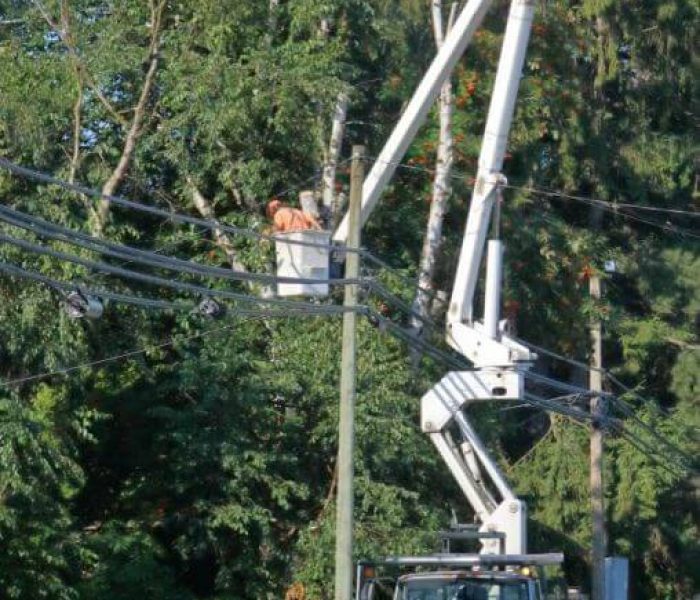
Aerial trucks are known for several kinds of general accidents, regardless of the work being performed. While specific industries might be more prone to certain accidents—such as electrocution for utility workers—other industries can still be at risk. For example, while tree trimmers don’t specifically work on power lines, they are often performing tree maintenance near power lines and are still at risk for electrocution accidents.
Some of the most common aerial lift accidents include:
One accident can easily lead to another when it comes to bucket trucks—such as collisions and falling or tip-over accidents. If you have been injured in an accident involving a bucket truck, the attorneys at Regan Zambri Long can review your case and help you hold the responsible party accountable for your accident.
At Regan Zambri Long, our experienced lawyers are prepared to investigate the facts of your case to establish liability and negligence, where applicable. Bucket truck accidents can result in severe injuries and even death. Though financial compensation cannot always make up for what is lost in an accident, you should not suffer more due to a company or individual’s reticence to be held accountable.
The bucket truck attorneys at Regan Zambri Long are experienced in bringing suits and claims in Washington, DC, Maryland, and Virginia. Whether arranging a settlement or arguing for a verdict, our attorneys are committed to getting you the most compensation possible so that you can focus on healing and recovery.
When you trust Regan Zambri Long with your case, you are getting nearly 200 years of cumulative experience. Our board-certified attorneys have built a strong reputation in Washington, DC, with three partners listed among the Top 100 Super Lawyers in DC and multiple Lawyers of the Year honors from Best Lawyers.
We have also earned national prominence, with all six partners named among Lawdragon’s 500 Leading Plaintiff Consumer Lawyers in the nation, and our consistent inclusion among the Best Law Firms in America. We are able to go up against big insurance companies and corporate lawyers to win compensation for our clients. We’ve recovered millions of dollars for our clients who have been injured including car and bucket truck accidents.
We don’t collect any fees until we’ve won a recovery in your favor, so call us at 202-978-4851 or contact us online for a free consultation today.
Have you or your loved one sustained injuries in Washington DC, Maryland or Virginia? Regan Zambri Long PLLC has the best lawyers in the country to analyze your case and answer the questions you may have.
We use cookies to improve your experience on our site. By using our site, you consent to cookies.
Manage your cookie preferences below:
Essential cookies enable basic functions and are necessary for the proper function of the website.
UserWay is an AI-powered accessibility widget that scans a website for WCAG and ADA accessibility issues and gives visitors on-page tools to adjust contrast, font size, navigation, and other display settings.
Service URL: userway.org (opens in a new window)
Marketing cookies are used to follow visitors to websites. The intention is to show ads that are relevant and engaging to the individual user.
AddToAny provides share and follow buttons that let visitors post your pages to social networks, messaging apps, and bookmarking services.
Service URL: www.addtoany.com (opens in a new window)
CallRail is a call tracking and analytics service. Its script swaps the phone numbers shown on a page and stores the visitor's referrer, landing page and session ID, so phone calls and form submissions can be attributed to the marketing source that brought the visitor to the site.
Service URL: www.callrail.com (opens in a new window)
CleanTalk offers effective spam protection and website security solutions to enhance user experience.
CloudFlare provides web performance and security solutions, enhancing site speed and protecting against threats.
Service URL: developers.cloudflare.com (opens in a new window)
Facebook Pixel is a web analytics service that tracks and reports website traffic.
Service URL: www.facebook.com (opens in a new window)
Google Ads is an online advertising platform that enables businesses to create targeted ads displayed on Google search results and partner sites.
Service URL: policies.google.com (opens in a new window)
Google Analytics is a powerful tool that tracks and analyzes website traffic for informed marketing decisions.
Service URL: policies.google.com (opens in a new window)
Google Maps is a web mapping service providing satellite imagery, real-time navigation, and location-based information.
Service URL: policies.google.com (opens in a new window)
Google Tag Manager simplifies the management of marketing tags on your website without code changes.
Matomo is an open-source web analytics platform that provides detailed insights into website traffic and user behavior.
Service URL: matomo.org (opens in a new window)
A video-sharing platform for users to upload, view, and share videos across various genres and topics.
Service URL: www.youtube.com (opens in a new window)
You can find more information in our Cookie Policy and Privacy Policy.