
A defective product can cause serious harm, and the law does not require you to prove the manufacturer intended to hurt you. Under strict product liability, the defect itself is what matters, and the injured person should not have to bear the burden of a company’s failure to ensure its products are safe. Regan Zambri Long’s DC product liability lawyers have spent nearly three decades holding manufacturers accountable when unsafe products cause harm.
For skilled legal representation in your product liability claim, contact Regan Zambri Long, PLLC. Founding partner Victor E. Long is a board-certified civil trial lawyer who has secured millions of dollars in product liability settlements for injured victims and their families and can do the same for you. Call today for a free consultation; you pay nothing unless we win.
Complete this form and our team will get back to you as soon as possible






Under strict product liability, a manufacturer or seller of a defective product, medical device, etc. can be held liable for the injuries of victims using that product even if there was no intent to harm.
This means that if you or a loved one were injured because of a faulty product, you can seek compensation for your injuries and related losses without proving the manufacturer was intentionally negligent. You do still, however, have to prove that the product caused you harm because it was defective and that the defect made the product dangerous.
While this is unlike other forms of personal injury law, strict liability was created in part to ensure that manufacturers were diligent in the release of products to the public, while also making it easier for victims to seek compensation from those manufacturers or sellers for injuries caused by those harmful products, devices, etc.
MILLION
Wrongful Death Settlement
MILLION
MILLION
Wrongful Death Verdict
MILLION
Premises Liability Settlement
MILLION
Wrongful Death Settlement
MILLION
Wrongful Death Verdict
MILLION
Medical Malpractice Settlement
MILLION
Personal Injury Settlement
MILLION
Car Accident Settlement
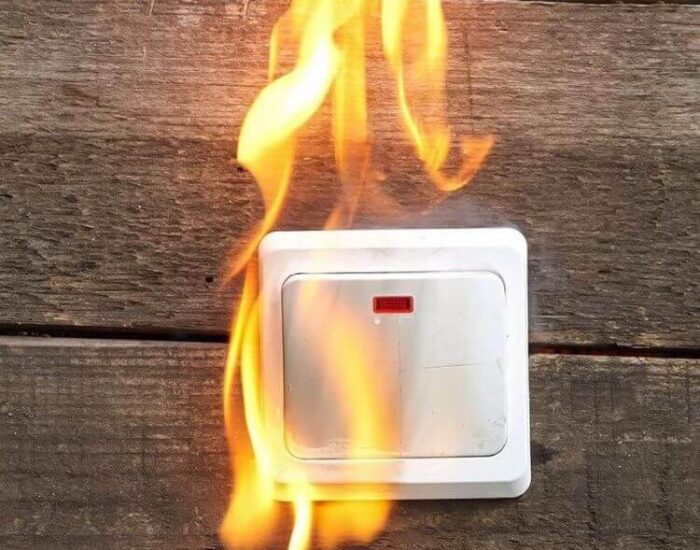
While many issues may arise causing a product to be unsafe and cause harm to consumers, the following are the most common product defects that occur in product liability claims:
Strict product liability claims are some of the more challenging types of product liability cases as the victim needs to prove that the conduct of the manufacturer or seller was below the relevant standard of care. However, as products are made cheaper and cheaper, determining what that relevant standard of care is is complicated.
To do so, your attorney will need experts in the field who can testify on what consumers should expect of product manufacturers. Finding an expert witness can be difficult to do on your own, so connecting with a strict product liability attorney as soon as you can will be imperative to the success of your case.
In addition, there are elements of a cause of action that need to be established in a strict product liability claim. They are:
Again, the plaintiff does not need to prove that the manufacturer was negligent or had the intent to harm, just that the product was defective and it caused injuries.
The United States Consumer Product Safety Commission estimates that more than nine percent of all personal injury cases are related to a defective product. While similar, there are key differences between absolute and strict liability defective product offenses. For a broader look at how strict liability applies across personal injury law, including outside of product cases, see our overview.
In a strict liability claim, the plaintiff needs to only prove that there was a defect in the product that caused the injury–not that there was an intention to do harm or an intentional defect. In these cases, the defendant can prove that they did practice their due diligence and is not to blame for the injuries.
This is unlike absolute liability where the plaintiff again only has to prove that the defect existed and not prove intent. But in defense, they cannot utilize due diligence, accident, etc. to mitigate fault.
When the defect in the product occurred will ultimately determine who can be held liable in a strict product liability claim. The following parties may be held liable for your injuries from a faulty product:

Once your legal team has determined who is at fault for the injuries sustained by the faulty product, you can take legal action to recover damages.
In a strict product liability claim, our injury attorneys can help you recover the following damages:
The negligence laws in your jurisdiction directly affect whether you can recover compensation in a strict liability claim and how much. Washington, DC, Maryland, and Virginia all follow pure contributory negligence, one of the strictest standards in the country. If you are found even slightly at fault, you may be barred from recovering anything.
Understanding how this rule applies to your claim is critical. A Washington, DC personal injury lawyer at Regan Zambri Long can evaluate your case and protect your right to compensation.
The statute of limitations for product liability claims also depends on the jurisdiction you are in. In Washington, DC, and Maryland, the statute of limitations for product liability cases is three years. In Virginia, you have two years to file a claim.
The rules governing deadlines are technical, layered, and unforgiving. If you miss the filing deadline, you lose the right to pursue compensation entirely, regardless of how strong your case is or how serious your injuries are. When the clock actually starts to tick can be a complex legal question that is very fact-specific and should be discussed with your lawyer as soon as possible.
Strict product liability cases turn on where in the chain, design, manufacturing, or distribution, the defect originated. The attorneys at Regan Zambri Long investigate that question thoroughly, identify the at-fault party, and build the strongest possible case for compensation on your behalf.
If you or someone you love has been injured in Washington DC, Maryland, or Virginia, as a result of a defective product, you may be entitled to financial compensation for your losses.
At Regan Zambri Long, our highly regarded product liability attorney Victor Long has won multimillion-dollar settlements for victims of defective products including a $4.2 million settlement for a 6-year-old, who was injured by defective playground equipment; and a $3.8 million settlement for a 5-year-old who was injured in a fire caused by a defective home appliance, resulting in changes in warning labels for consumers.
Not all personal injury lawyers are equipped to handle the intricacies of strict product liability claims–but we are. When a defective product causes severe injury, know that you don’t have to handle it alone. We know that the stakes are high–let us help.
For a no-obligation, free consultation with the strict product liability lawyers of Regan Zambri Long, call us at 202-960-4596 or connect with us online.
Have you or your loved one sustained injuries in Washington DC, Maryland or Virginia? Regan Zambri Long PLLC has the best lawyers in the country to analyze your case and answer the questions you may have.
We use cookies to improve your experience on our site. By using our site, you consent to cookies.
Manage your cookie preferences below:
Essential cookies enable basic functions and are necessary for the proper function of the website.
UserWay is an AI-powered accessibility widget that scans a website for WCAG and ADA accessibility issues and gives visitors on-page tools to adjust contrast, font size, navigation, and other display settings.
Service URL: userway.org (opens in a new window)
Marketing cookies are used to follow visitors to websites. The intention is to show ads that are relevant and engaging to the individual user.
AddToAny provides share and follow buttons that let visitors post your pages to social networks, messaging apps, and bookmarking services.
Service URL: www.addtoany.com (opens in a new window)
CallRail is a call tracking and analytics service. Its script swaps the phone numbers shown on a page and stores the visitor's referrer, landing page and session ID, so phone calls and form submissions can be attributed to the marketing source that brought the visitor to the site.
Service URL: www.callrail.com (opens in a new window)
CleanTalk offers effective spam protection and website security solutions to enhance user experience.
CloudFlare provides web performance and security solutions, enhancing site speed and protecting against threats.
Service URL: developers.cloudflare.com (opens in a new window)
Facebook Pixel is a web analytics service that tracks and reports website traffic.
Service URL: www.facebook.com (opens in a new window)
Google Ads is an online advertising platform that enables businesses to create targeted ads displayed on Google search results and partner sites.
Service URL: policies.google.com (opens in a new window)
Google Analytics is a powerful tool that tracks and analyzes website traffic for informed marketing decisions.
Service URL: policies.google.com (opens in a new window)
Google Maps is a web mapping service providing satellite imagery, real-time navigation, and location-based information.
Service URL: policies.google.com (opens in a new window)
Google Tag Manager simplifies the management of marketing tags on your website without code changes.
Matomo is an open-source web analytics platform that provides detailed insights into website traffic and user behavior.
Service URL: matomo.org (opens in a new window)
A video-sharing platform for users to upload, view, and share videos across various genres and topics.
Service URL: www.youtube.com (opens in a new window)
You can find more information in our Cookie Policy and Privacy Policy.