
Call Us Now
202-960-4596
Schedule a Free Consultation


A crash at the I-395 Express Lanes and Duke Street interchange can involve more than the two drivers who collided. Because the merge point sits where the Transurban-operated Express Lanes connect with the wider I-395 corridor, how a crash happened at this specific location can determine who can be sued. Virginia’s strict fault rule can also determine whether an injured driver in an I-395 Express Lanes accident can recover anything at all.
The Duke Street interchange has seen a cluster of serious crashes recently, including fatal incidents and multi-vehicle collisions that closed lanes and caused miles of backups, according to local news coverage from Hoodline, WTOP, and WJLA.
One I-395 Express Lanes accident involved a wrong-way driver who collided with other vehicles within the reversible express lanes. A location with a recurring pattern of serious crashes often reflects how the road is designed or managed, not just a string of unrelated driver errors. The merge itself can therefore matter when assessing liability.
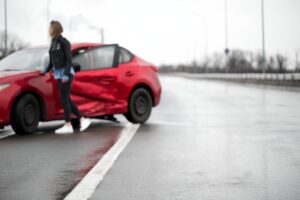 Virginia is one of only a few states that still follows pure contributory negligence. Under the long-standing rule from Baskett v. Banks, an injured driver who is found even 1% at fault for a crash can be barred from recovering anything, no matter how much more at fault the other driver was. A merge crash is exactly the kind of collision where insurers look hard for shared fault, since both the merging driver and the through-lane driver typically have some duty to the other.
Virginia recognizes exceptions that can affect the outcome of a merge crash. According to the last clear chance doctrine, a driver who had the final, real opportunity to avoid the crash may still be held liable even if the other driver was negligent earlier in the sequence of events. The sudden emergency doctrine can also apply when a driver, through no prior negligence of their own, is forced into a quick decision by another driver’s sudden lane change or wrong-way movement.
In an I-395 Express Lanes accident case built around exactly where and how a merge went wrong, these doctrines can be the difference between a barred claim and a recoverable one.
The I-395 Express Lanes are a public-private partnership. VDOT owns and oversees the lanes, while Transurban, a private company, finances, designs changes to, and operates them on a day-to-day basis. The split is important because VDOT, as a state agency, has sovereign immunity that a private operator like Transurban does not.
VDOT’s immunity isn’t absolute, though, and a recent Virginia case shows how narrowly courts can draw the line. In a 2026 Fairfax County case, a judge held that VDOT could claim immunity for failing to repaint intersection lane markings because that was a discretionary, budget-dependent decision. The judge denied immunity for failing to clear vegetation blocking a driver’s view because that kind of upkeep did not require new funding or policy judgment, according to Virginia Lawyers Weekly’s coverage of the ruling.
Applied to a merge like Duke Street, the same distinction could have a significant effect. A claim that the merge lane is simply too short by design may run into VDOT immunity as a discretionary engineering decision, while a claim based on obscured signage, a malfunctioning reversible-lane signal, or a maintenance failure may not.
Transurban’s role adds another layer. As the entity actually managing the reversible lanes day-to-day, including signage and lane-direction signals, questions about how the express lanes were operated at the time of a crash point to Transurban rather than VDOT. A private company does not have sovereign immunity to raise as a defense.
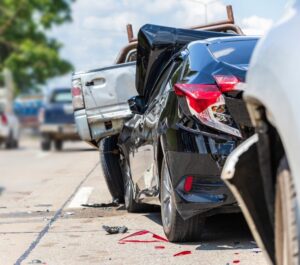 Virginia’s contributory negligence rule can bar a claim over a single percentage point of fault, while VDOT and Transurban may also have very different immunity protections. A crash at this merge often can’t be evaluated the same way as a routine rear-end collision.
Relevant I-395 Express Lanes accident evidence can include:
This evidence often has to be requested and preserved quickly, since electronic traffic-control records and maintenance logs aren’t held indefinitely.
A crash at a complex interchange like this deserves an investigation that goes beyond the two vehicles involved. Regan Zambri Long has represented clients in serious Virginia crash cases, including a $10.6 million settlement for a client who suffered paraplegia, a spinal cord injury, and a traumatic brain injury in an automobile collision.
If you were injured in an I-395 Express Lanes accident near Duke Street, contact Regan Zambri Long for a free consultation.


Have you or your loved one sustained injuries in Washington DC, Maryland or Virginia? Regan Zambri Long PLLC has the best lawyers in the country to analyze your case and answer the questions you may have.