
When a person dies due to someone else’s negligence in Washington, DC, the law recognizes two distinct legal claims: a wrongful death action and a survival action. While both arise from the same fatal incident, they serve different purposes, compensate for different losses, and follow separate legal paths.
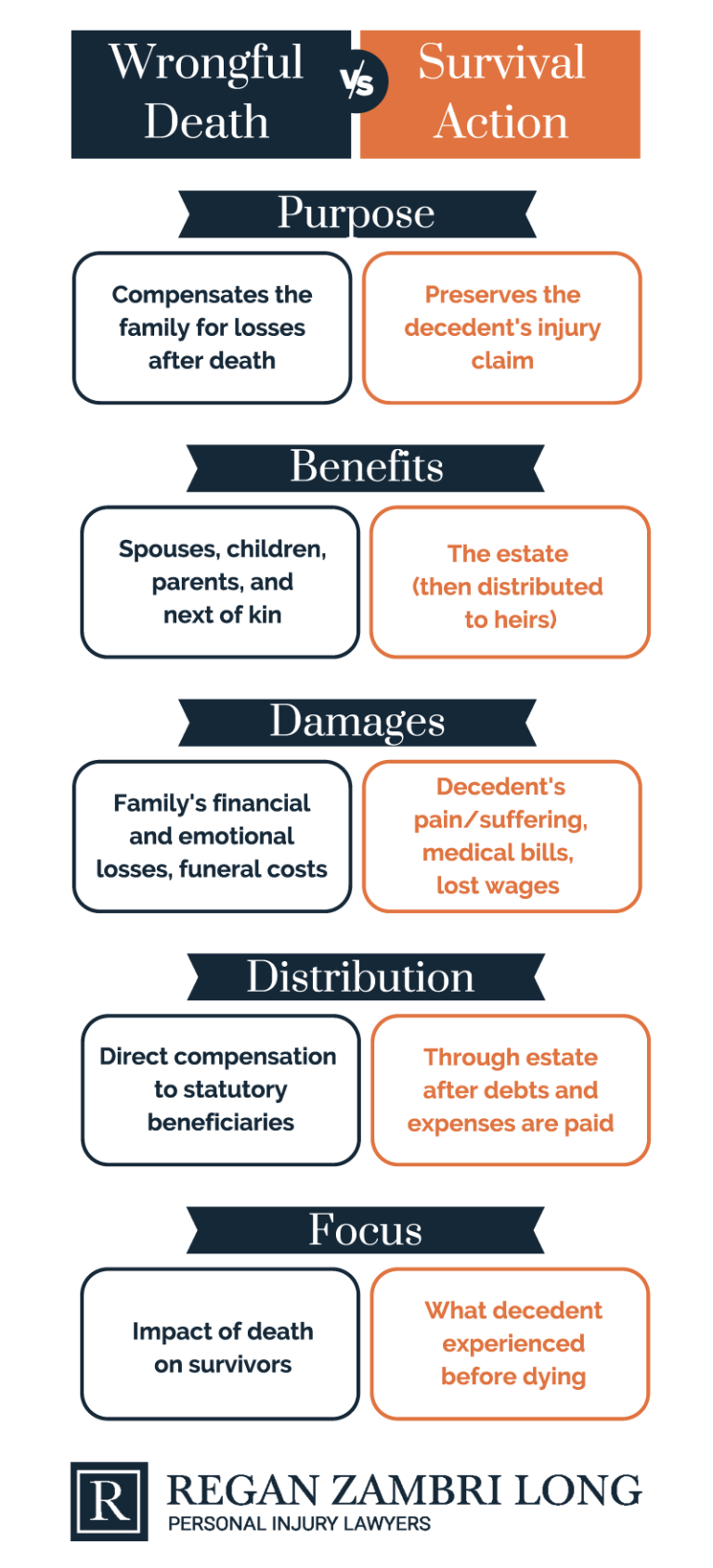
A wrongful death claim compensates the family for their losses after the death, while a survival action preserves the deceased person’s own injury claim and seeks damages for what they experienced before dying. Understanding the difference between these two claims is essential to protecting your family’s rights and maximizing the compensation available after a fatal accident.
Both claims can be filed in the same case, but each has distinct rules governing who can file, what damages are available, and how compensation is distributed. Knowing when to pursue a wrongful death claim, a survival action, or both requires careful legal analysis of the circumstances surrounding the death, the decedent’s suffering before passing, and the family’s financial and emotional losses. At Regan Zambri Long, our Washington, DC wrongful death attorneys have decades of experience navigating both claims to secure full justice for grieving families.
Complete this form and our team will get back to you as soon as possible






A wrongful death claim under DC Code § 16-2701 is a civil action brought to compensate family members for the losses they suffer when a loved one dies due to another party’s negligence, recklessness, or intentional harm. This claim focuses exclusively on how the death has impacted the surviving family financially, emotionally, and practically.
MILLION
Wrongful Death Settlement
MILLION
MILLION
Wrongful Death Verdict
MILLION
Premises Liability Settlement
MILLION
Wrongful Death Settlement
MILLION
Wrongful Death Verdict
MILLION
Medical Malpractice Settlement
MILLION
Personal Injury Settlement
MILLION
Car Accident Settlement
Under DC law, only the personal representative of the deceased person’s estate can file a wrongful death lawsuit. However, the personal representative does not file for their own benefit. Instead, they bring the claim on behalf of eligible beneficiaries, which include:
The personal representative must be appointed by the DC Superior Court Probate Division before filing the lawsuit. If no personal representative has been appointed, family members can petition the court to name one.
Wrongful death damages are designed to compensate the family for what they have lost due to the death. These damages fall into both economic and non-economic categories:
These damages reflect the family’s losses, not what the decedent themselves experienced. The statute specifically allows recovery for the “loss of the services, protection, care, assistance, society, companionship, comfort, guidance, counsel, and advice of the decedent.”
Wrongful death damages do not include the decedent’s own pain and suffering or medical bills—those belong to a survival action.

A survival action under DC Code § 16-101 operates on an entirely different principle. This claim is not about the family’s losses. Instead, it preserves the personal injury claim that the deceased person would have had if they had survived. The survival action “survives” the death and continues on behalf of the estate.
When someone is injured due to negligence, they have a right to sue for their injuries. If that person dies, whether from those injuries or from an unrelated cause, DC law allows their estate to continue pursuing that claim. The survival action belongs to the estate, not to individual family members. It seeks compensation for what the decedent experienced between the time of injury and death.
Like wrongful death claims, survival action lawsuits must be filed by the personal representative of the estate. The personal representative acts on behalf of the estate and must be appointed through the DC probate process. Family members cannot file a survival action directly; they must work through the estate’s representative.
Understanding probate is important here. When someone dies, their assets and legal claims become part of their estate, which is administered through probate court. The DC Courts Probate Division oversees the appointment of personal representatives and the administration of estates.
Survival action damages focus on what the decedent themselves experienced before death:
Conscious Pain and Suffering: If the decedent remained conscious after the injury, the estate can recover damages for physical pain, emotional distress, and mental anguish they endured before dying.
Medical Bills: All medical expenses incurred between the injury and death are recoverable, including emergency care, hospitalization, surgery, and end-of-life care.
Lost Wages: If the decedent survived for any period after the injury, the estate can recover lost income from the time of injury until death.
Property Damage: If the incident caused damage to the decedent’s property (such as a vehicle in a car accident), those losses can be recovered through the survival action.
This is a critical distinction: survival action proceeds do not go directly to family members. Instead, they become assets of the estate. The personal representative collects the recovery, pays estate debts and expenses, and then distributes remaining assets according to the decedent’s will or, if there is no will, according to DC’s intestacy laws.
This difference has important implications for taxes, creditor claims, and the speed at which family members receive compensation.
The fundamental difference comes down to perspective. Wrongful death claims look forward from the moment of death to compensate the family’s ongoing losses, while survival actions look backward to compensate the decedent for what they suffered before death.
Experienced wrongful death attorneys typically file both claims together when the facts support both. This comprehensive approach ensures no available compensation is left on the table.
Filing both claims addresses the full scope of harm caused by the fatal incident. The wrongful death claim captures the family’s ongoing losses, such as the decades of lost financial support, companionship, and guidance. The survival action lawsuit captures what the decedent endured—their pain, medical treatment, and final wages. Together, they paint a complete picture of the tragedy’s impact.
Each claim requires different evidence. For wrongful death claims, attorneys focus on proof of the family’s relationship with the decedent, their financial dependence, the emotional bond, and projected future losses. For survival actions, the focus shifts to medical records documenting consciousness and pain, treatment records, wage statements, and evidence of the decedent’s awareness and suffering.
Both claims usually proceed together in the same lawsuit, but they have separate damage calculations. During settlement negotiations or trial, defendants and their insurers must address both components. The personal representative acts as plaintiff for both claims but must keep accounting separate.
The personal representative must coordinate with family members about the wrongful death claim while simultaneously managing estate obligations for the survival action. This includes paying estate debts, filing tax returns, and eventually distributing survival proceeds according to inheritance laws.
Defendants often try to minimize survival action damages by arguing the decedent died quickly and experienced little suffering, or by challenging medical causation between the injury and death. For wrongful death claims, they may dispute the value of lost financial support or question the closeness of family relationships. Understanding these common defenses helps attorneys build stronger cases for both claims.
Understanding whether you have a wrongful death claim, a survival action, or both directly impacts your family’s recovery and the legal strategy your attorney pursues.
Filing both claims when appropriate ensures you recover all available compensation. Some families lose significant damages by failing to pursue a survival action when the decedent suffered before death, or by not properly documenting family losses in the wrongful death claim.
Different facts may support liability against different parties for each claim. The wrongful death action might target the driver who caused a fatal crash, while the survival action could also include the hospital that failed to treat injuries properly. Comprehensive legal analysis identifies everyone who shares responsibility.
DC has strict time limits for both claims. While both generally follow the same statute of limitations, certain circumstances can shorten or extend deadlines. Missing a deadline means losing your right to compensation entirely, making prompt legal action essential.
Evidence critical to both claims can disappear rapidly after a death. Accident scenes get cleaned up, witnesses’ memories fade, and defendants destroy or lose records. Quick action by an attorney preserves crucial evidence, such as medical records documenting suffering, financial documents showing lost income, and witness statements about the family’s relationship with the decedent.
The distinction matters when presenting your case to insurers, defendants, or a jury. Wrongful death damages emphasize future losses and emotional harm to the family. Survival damages focus on past, tangible harm the decedent experienced. Using the wrong framework or mixing the two weakens your claim and can reduce compensation.
Yes. DC law allows families to pursue both a wrongful death and survival action claim from the same death. The personal representative typically files both in a single lawsuit, though they remain legally distinct claims with separate damage calculations. Filing both ensures comprehensive compensation for all losses, both what the family lost and what the decedent suffered.
If death were truly instantaneous, a survival action lawsuit may not be viable because the decedent did not experience conscious pain, incur medical bills, or lose wages between injury and death. However, “instant death” is rare in practice. Even seconds of consciousness can support a survival claim. Medical experts often determine that some level of awareness or pain occurred, even in seemingly immediate deaths.
The personal representative, in consultation with an attorney and the family, decides whether to file a wrongful death action or a survival action case. However, this is not really a choice between one or the other. If the facts support both claims, a competent attorney will file both. The decision involves analyzing the evidence, assessing potential damages, and determining the strongest path to maximum compensation.
Survival action proceeds become estate assets. The personal representative uses them first to pay estate debts, administrative expenses, and taxes. After these obligations are satisfied, the remaining funds are distributed to heirs according to the decedent’s will or, without a will, under DC intestacy laws. This process differs from wrongful death proceeds, which go directly to statutory beneficiaries.
Yes, if the defendant’s conduct was willful, wanton, or particularly egregious, DC law allows punitive damages in survival actions. These damages punish the wrongdoer and deter similar conduct. Punitive damages are not available in wrongful death claims. They belong exclusively to survival actions and become part of the estate.
Yes, DC follows a strict contributory negligence rule that bars recovery if the decedent was even 1% at fault for their injuries. This harsh rule applies to both wrongful death and survival actions. If the defendant proves the decedent contributed to causing the accident in any way, the claims may be completely defeated. This makes thorough investigation and aggressive defense against fault allegations critical.
Losing a loved one to someone else’s negligence creates overwhelming emotional and financial challenges. Understanding the legal distinction between wrongful death claims and survival actions helps ensure your family receives full compensation for every loss you have suffered.
At Regan Zambri Long, our compassionate and experienced wrongful death attorneys guide families through both claims with skill and dedication. We handle the legal complexities while you focus on healing.
Contact us today for a free consultation to discuss your case and learn how we can help you pursue justice for your family.
Have you or your loved one sustained injuries in Washington DC, Maryland or Virginia? Regan Zambri Long PLLC has the best lawyers in the country to analyze your case and answer the questions you may have.
We use cookies to improve your experience on our site. By using our site, you consent to cookies.
Manage your cookie preferences below:
Essential cookies enable basic functions and are necessary for the proper function of the website.
UserWay is an AI-powered accessibility widget that scans a website for WCAG and ADA accessibility issues and gives visitors on-page tools to adjust contrast, font size, navigation, and other display settings.
Service URL: userway.org (opens in a new window)
Marketing cookies are used to follow visitors to websites. The intention is to show ads that are relevant and engaging to the individual user.
AddToAny provides share and follow buttons that let visitors post your pages to social networks, messaging apps, and bookmarking services.
Service URL: www.addtoany.com (opens in a new window)
CallRail is a call tracking and analytics service. Its script swaps the phone numbers shown on a page and stores the visitor's referrer, landing page and session ID, so phone calls and form submissions can be attributed to the marketing source that brought the visitor to the site.
Service URL: www.callrail.com (opens in a new window)
CleanTalk offers effective spam protection and website security solutions to enhance user experience.
CloudFlare provides web performance and security solutions, enhancing site speed and protecting against threats.
Service URL: developers.cloudflare.com (opens in a new window)
Facebook Pixel is a web analytics service that tracks and reports website traffic.
Service URL: www.facebook.com (opens in a new window)
Google Ads is an online advertising platform that enables businesses to create targeted ads displayed on Google search results and partner sites.
Service URL: policies.google.com (opens in a new window)
Google Analytics is a powerful tool that tracks and analyzes website traffic for informed marketing decisions.
Service URL: policies.google.com (opens in a new window)
Google Maps is a web mapping service providing satellite imagery, real-time navigation, and location-based information.
Service URL: policies.google.com (opens in a new window)
Google Tag Manager simplifies the management of marketing tags on your website without code changes.
Matomo is an open-source web analytics platform that provides detailed insights into website traffic and user behavior.
Service URL: matomo.org (opens in a new window)
A video-sharing platform for users to upload, view, and share videos across various genres and topics.
Service URL: www.youtube.com (opens in a new window)
You can find more information in our Cookie Policy and Privacy Policy.