
Food poisoning can last anywhere between a few hours and a few days, though some foodborne illnesses can take up to a week or linger for weeks in severe cases. How long you feel sick depends on the type of contamination. Bacterial infections like Staph can hit within 30 minutes and pass in a day, while parasites like Cyclospora can take a week to show symptoms and linger for a month or longer.
If you already know you want to talk to someone, Regan Zambri Long’s DC food poisoning lawyers offer free consultations; call 202-960-4596 or use the contact form on this page.
Complete this form and our team will get back to you as soon as possible
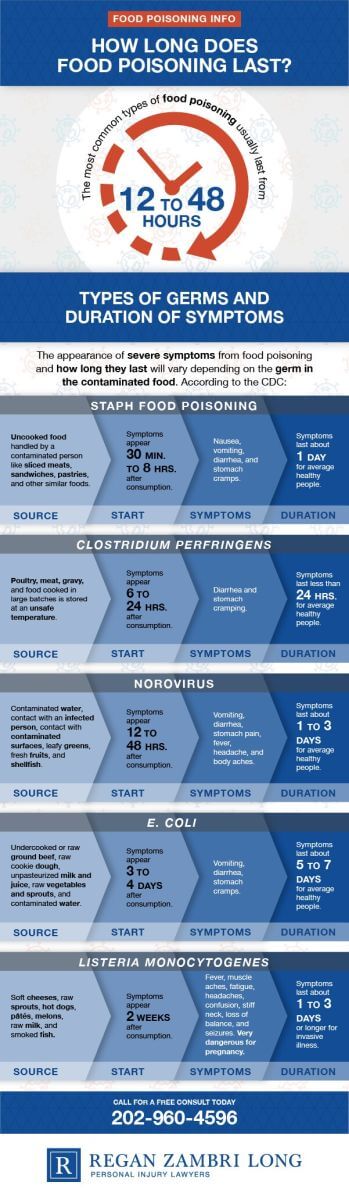
How long food poisoning lasts depends on the germ. Most cases clear within a few days, but some illnesses begin within hours and others take up to two weeks to appear:
| Type of food poisoning | Symptoms start | Typical duration |
|---|---|---|
| Staph (Staphylococcus aureus) | 30 minutes to 8 hours | About 1 day |
| Clostridium perfringens | 6 to 24 hours | Less than 1 day |
| Norovirus | 12 to 48 hours | Between 1 and 3 days |
| Vibrio | Within 24 hours | Up to 4 days |
| Botulism | 18 to 36 hours | for weeks or even months |
| Campylobacter | 2 to 5 days | About 1 week |
| E. coli | 3 to 4 days | 5 to 10 days |
| Cyclospora | About 1 week | 1 to 2 weeks or longer if untreated |
| Listeria | Up to 2 weeks | 1 to 3 days |
The onset of food poisoning symptoms varies depending on the type of contamination. Bacterial symptoms, like those associated with Campylobacter or Clostridium perfringens, usually begin within 24 hours and sometimes start as soon as 30 minutes after eating. Virus symptoms, like those associated with Norovirus, can start 12 to 48 hours after eating. Symptoms from parasites such as Giardia lamblia may take up to a week to appear.
If you suspect food poisoning, get tested as soon as possible. If the test confirms a foodborne illness, make sure you keep the results, medical records, and proof linking your food poisoning to a specific food product or dining experience, such as food remains, food delivery app confirmations, or receipts. This evidence can help your food poisoning lawyer if you decide to pursue a legal claim.
The appearance of severe symptoms from food poisoning and their duration will vary depending on the germ in the contaminated food. According to the Centers for Disease Control and Prevention, these can include:
The toxins produced by the Staphylococcus aureus bacteria usually cause symptoms to appear 30 minutes to eight hours after eating contaminated food and last about a day. Common symptoms usually include:
This type of food poisoning occurs when foods are not cooked after being handled by a person carrying Staph who has not washed their hands. Common sources of contamination include sliced meats, sandwiches, pastries, and other similar foods.
Vibrio bacteria are usually found in undercooked shellfish and raw oysters. When ingested, this bacteria can cause symptoms such as:
These common symptoms of Vibrio start within 24 hours and last around three days.
Food contaminated with Clostridium perfringens is one of the most common causes of food poisoning in the United States, and the CDC estimates that it is responsible for nearly 1 million cases of foodborne illness each year. Outbreaks of C. perfringens occur when poultry, meat, gravy, and food cooked in large batches are stored at an unsafe temperature of 40°F–140°F. The symptoms appear after 6 to 24 hours, and include:
These symptoms usually last for less than 24 hours.
Norovirus infections are usually mistaken for a stomach flu. This virus is the most common cause of foodborne illness symptoms, such as:
These symptoms generally appear in 12 to 48 hours. Norovirus food poisoning is commonly caused by contaminated water, contact with an infected person, contact with contaminated surfaces, leafy greens, fresh fruits, and shellfish. People with norovirus usually get better in one to three days, but they are still contagious for a few days after the symptoms disappear.
Clostridium botulinum is a bacterium that produces a toxin that attacks the body’s nerves, causing difficulty breathing, muscle paralysis, and even death. Symptoms of botulism appear 18 to 36 hours after eating contaminated food and include:
This bacterium is commonly found in improperly canned foods, fermented foods, or homemade alcohol. About 5% of people diagnosed with botulism die, according to the CDC.
Campylobacter is the most common bacterial cause of diarrheal illness, affecting 1.5 million people in the United States annually. Symptoms include:
Symptoms usually appear after two to five days of exposure. Raw or undercooked poultry that has been consumed or prepared on cutting boards that spread the bacteria to other foods, unpasteurized milk and dairy products, contaminated water, and contact with cat or dog feces have been associated with Campylobacter outbreaks. Common complications can include:
Campylobacter can also spread to the bloodstream of immunocompromised people, causing a life-threatening infection.
Undercooked or raw ground beef, raw cookie dough, unpasteurized milk and juice, raw vegetables and sprouts, and contaminated water have been linked to E. coli outbreaks. It takes 3 to 4 days for E. coli food poisoning symptoms to appear. Symptoms can include:
Most people feel better after 5 to 7 days. According to the World Health Organization, 5–10% of victims develop hemolytic uremic syndrome, which is a life-threatening condition that affects the kidneys and blood clotting functions.
Cyclospora cayetanensis is a single cell parasite that causes an intestinal infection called cyclosporiasis. It is spread when food or water is contaminated with feces and is often found in raw fruits, vegetables, and herbs. Cyclospora food poisoning symptoms generally appear 1 week after infection and include:
This foodborne illness can last for a few days, a month, or even longer, and it is common for people to experience a relapse.
If your food poisoning was caused by a restaurant, catered event, grocery store product, or recalled food item, you may be entitled to compensation for medical bills, lost income, and pain and suffering ,even if you’ve already recovered.
Most people don’t realize that food poisoning caused by someone else’s negligence is a personal injury case. You shouldn’t have to pay for someone else’s failure to handle food safely.
Regan Zambri Long’s DC food poisoning lawyers offer free, no-obligation consultations. One of our attorneys will review your situation personally and tell you whether you have a case, at no cost to you.
Food poisoning can occur when food is not cooked or stored at the right temperature, when a sickened worker or consumer contaminates it, and when it contains substances that are toxic to the body, including:
Though food poisoning can affect anyone, certain groups are at greater risk of more serious complications. These include pregnant women, young children, the elderly, and people with weakened immune systems.
Almost half of the people 65 or older who have food poisoning caused by Salmonella, Campylobacter, Listeria, or E. coli require hospitalization and immediate medical attention. Because of their age, their immune systems may not be as strong and able to fight off the infection.
Foodborne illnesses can cause significant harm to an unborn baby. Listeria, for example, is one of the most dangerous types of food poisoning during pregnancy because pregnant women are 10 times more likely to get it than other people. In newborns, a Listeria infection can cause serious illness requiring immediate medical treatment and even death.
Young children with developing immune systems can suffer severe illness from food poisoning and are three times more likely to be hospitalized if they get a Salmonella infection. One in seven children under 5 years of age who are diagnosed with E. coli suffer from kidney failure. It is especially important to prevent dehydration in young children and seek medical attention immediately if they show food poisoning symptoms.
People with HIV/AIDS, cancer, autoimmune disorders, and other medical conditions that weaken their immune system may have difficulty fighting off a foodborne illness. They are more likely to experience long-term effects from the infection. For instance, people on dialysis are 50 times more likely to get Listeria.
The effects of food poisoning can last long after the symptoms have gone away. People who have suffered severe complications from foodborne illnesses may experience chronic health issues and even permanent disabilities including:
Did a doctor or urgent care provider diagnose your illness? A medical diagnosis linking your symptoms to a specific foodborne pathogen strengthens your claim significantly. If you were tested and received a positive result, keep those records. If you haven’t been tested yet, that’s the first step.
Did you miss work or incur medical expenses? If your food poisoning caused you to miss shifts, lose income, visit an emergency room or urgent care, or require follow-up treatment, those are compensable damages. This includes ambulance costs, prescriptions, and any ongoing care.
Did you or a family member experience severe or lasting symptoms? Hospitalizations, complications like kidney damage or reactive arthritis, and prolonged illness lasting weeks or months can significantly increase the value of your claim — and the urgency of speaking with an attorney.
Were others affected by the same source? If coworkers, family members, or other diners got sick from the same food, that pattern strengthens a claim against the responsible party. Health department reports and news coverage of outbreaks can also support your case.
If any of this sounds familiar, it costs nothing to find out where you stand. Regan Zambri Long’s food poisoning attorneys will evaluate your case for free, and there’s no fee unless we recover compensation for you. Washington, DC, gives you three years from the date of injury to file a claim, but evidence like test results, food samples, and restaurant records can disappear fast.
The most important way to prevent food poisoning and foodborne disease is to practice safe handling of food. This includes practicing proper hygiene and washing hands and surfaces regularly, thoroughly cooking raw meat and eggs, avoiding cross-contamination between raw and cooked foods, refrigerating perishable items promptly after cooking or purchase, and reheating leftovers properly.
Regan Zambri Long senior partner Salvatore Zambri leads the firm’s food poisoning cases and was named Lawyer of the Year for Product Liability Litigation by Best Lawyers. If you or a loved one has suffered serious illness from contaminated food, Call 202-960-4596 or contact us online for a free consultation. You have three years from the date of injury to file a claim in Washington, DC.






MILLION
Wrongful Death Settlement
MILLION
MILLION
Wrongful Death Verdict
MILLION
Premises Liability Settlement
MILLION
Wrongful Death Settlement
MILLION
Wrongful Death Verdict
MILLION
Medical Malpractice Settlement
MILLION
Personal Injury Settlement
MILLION
Car Accident Settlement
Have you or your loved one sustained injuries in Washington DC, Maryland or Virginia? Regan Zambri Long PLLC has the best lawyers in the country to analyze your case and answer the questions you may have.
We use cookies to improve your experience on our site. By using our site, you consent to cookies.
Manage your cookie preferences below:
Essential cookies enable basic functions and are necessary for the proper function of the website.
UserWay is an AI-powered accessibility widget that scans a website for WCAG and ADA accessibility issues and gives visitors on-page tools to adjust contrast, font size, navigation, and other display settings.
Service URL: userway.org (opens in a new window)
Marketing cookies are used to follow visitors to websites. The intention is to show ads that are relevant and engaging to the individual user.
AddToAny provides share and follow buttons that let visitors post your pages to social networks, messaging apps, and bookmarking services.
Service URL: www.addtoany.com (opens in a new window)
CallRail is a call tracking and analytics service. Its script swaps the phone numbers shown on a page and stores the visitor's referrer, landing page and session ID, so phone calls and form submissions can be attributed to the marketing source that brought the visitor to the site.
Service URL: www.callrail.com (opens in a new window)
CleanTalk offers effective spam protection and website security solutions to enhance user experience.
CloudFlare provides web performance and security solutions, enhancing site speed and protecting against threats.
Service URL: developers.cloudflare.com (opens in a new window)
Facebook Pixel is a web analytics service that tracks and reports website traffic.
Service URL: www.facebook.com (opens in a new window)
Google Ads is an online advertising platform that enables businesses to create targeted ads displayed on Google search results and partner sites.
Service URL: policies.google.com (opens in a new window)
Google Analytics is a powerful tool that tracks and analyzes website traffic for informed marketing decisions.
Service URL: policies.google.com (opens in a new window)
Google Maps is a web mapping service providing satellite imagery, real-time navigation, and location-based information.
Service URL: policies.google.com (opens in a new window)
Google Tag Manager simplifies the management of marketing tags on your website without code changes.
Matomo is an open-source web analytics platform that provides detailed insights into website traffic and user behavior.
Service URL: matomo.org (opens in a new window)
A video-sharing platform for users to upload, view, and share videos across various genres and topics.
Service URL: www.youtube.com (opens in a new window)
You can find more information in our Cookie Policy and Privacy Policy.