
Call Us Now
202-960-4596
Schedule a Free Consultation


A freight broker can be sued after a Washington, DC, truck accident if their choices helped put an unsafe carrier on the road. Most people assume a truck accident claim begins with the driver and the trucking company. While this is true in many cases, commercial freight usually involves more than one business.
A shipper needs goods moved, and a carrier has the truck and driver available. Between them may be a freight broker. When a broker chooses a carrier with a poor safety record, ignores warning signs, or pushes delivery demands that increase crash risk, freight broker liability in a truck accident in Washington, DC, can become an important part of the case.
A freight broker connects shippers with motor carriers. Under normal circumstances, the broker does not own the truck, employ the driver, load the trailer, or operate the vehicle. Its role is to arrange the shipment, match the load with a carrier, and collect a fee for coordinating the transaction.
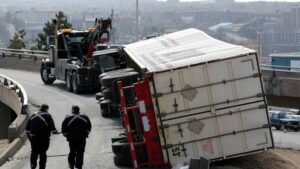
Freight brokers sit in the middle of the commercial transportation chain. When a load is moving through Washington, DC, Northern Virginia, or Maryland, the broker may have handled multiple links in that chain, from carrier selection and rate confirmation to pickup instructions, delivery timelines, and communication between the shipper and the trucking company.
The broker may feel like a distant party for a person injured in a truck accident. In reality, the broker may have made one of the most important decisions in the entire chain by choosing which carrier to trust with the load.
Freight broker liability in a truck accident in Washington, DC, usually begins with negligent selection, meaning the broker may have chosen a carrier it knew, or should have known, was unsafe. A broker has access to public safety information about motor carriers, including FMCSA records. These records show crash history, inspection problems, out-of-service rates, insurance status, and authority to operate.
If a broker hired a carrier with a documented unsafe record, and the carrier later caused a serious crash, the broker’s selection decision can become a key part of the liability investigation. The broker had tools available to evaluate the carrier and made a choice that could have legal consequences if the risk was foreseeable.
For example, a broker may face scrutiny if it selects a carrier with a history of unsafe driving violations, repeated vehicle maintenance failures, or prior crashes involving similar conduct. The issue is whether a reasonable broker would have recognized the risk before assigning the load.
A broker’s involvement moves closer to direct liability when it exerts control over the shipment. Delivery deadlines, route pressure, check-in demands, or instructions that influence how the trip is performed can all be relevant to the case. The more control the broker exercises over the carrier’s work, the harder it becomes to treat the broker as a passive middleman.
The implementation of the January 2026 FMCSA broker financial responsibility rule affects freight brokers by tightening the consequences for failing to maintain the required $75,000 in financial security.
Brokers and freight forwarders must maintain that security through a surety bond or trust fund, and updated trucking laws and regulations give FMCSA clearer authority to suspend broker operations for noncompliance. The rule signals that federal regulators now treat broker financial accountability as a real enforcement issue, rather than a paperwork requirement.

Freight broker liability for a truck accident in Washington, DC, can expand the pool of responsible parties and available coverage after a serious crash. The driver and trucking company may be the most obvious defendants, but they might not carry enough insurance to cover catastrophic injuries, long hospital stays, surgery, lost income, permanent pain, and future care needs.
At Regan Zambri Long, our truck accident attorneys investigate the full transportation chain after a commercial truck accident. We look beyond the police report and examine load confirmation records, broker-carrier agreements, dispatch communications, FMCSA safety data, insurance filings, and the prior relationship between the broker and carrier.
After a serious truck accident, the company name on the truck’s side may only tell part of the story. A freight broker, shipper, carrier, maintenance provider, or another commercial party may have contributed to the crash.
If you were injured in a Washington, DC truck accident involving a commercial vehicle, contact Regan Zambri Long today for a free consultation. We can explain your options and investigate every party that may be responsible.


Have you or your loved one sustained injuries in Washington DC, Maryland or Virginia? Regan Zambri Long PLLC has the best lawyers in the country to analyze your case and answer the questions you may have.