
Call Us Now
202-960-4596
Schedule a Free Consultation

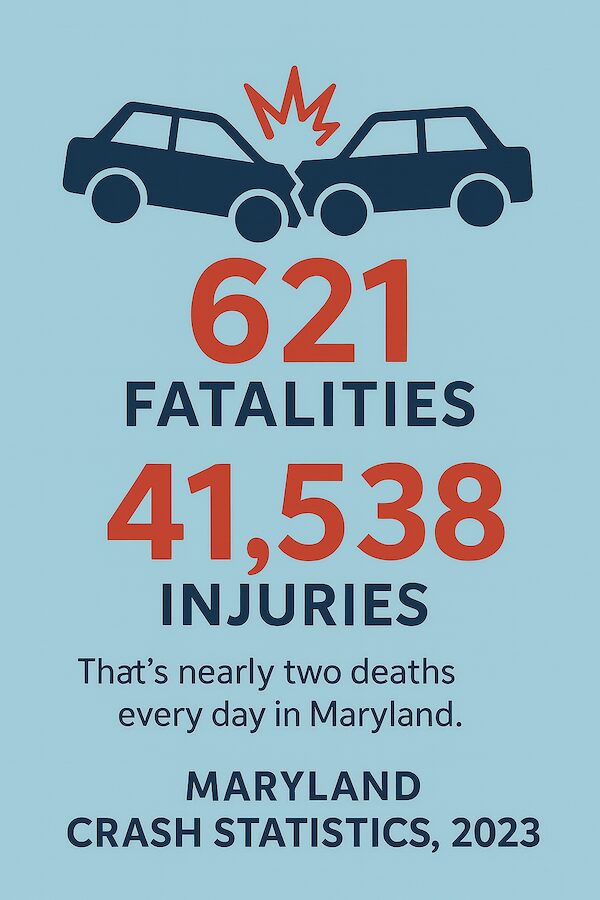 Every year in Maryland, over 600 people die in traffic crashes—that’s nearly two deaths every single day. According to the Maryland Strategic Highway Safety Plan 2021-2025 published by the Maryland Department of Transportation, the state recorded 621 fatalities and 41,538 injuries from motor vehicle accidents in 2023 (MDOT Highway Safety Office, 2024). Each statistic represents a family forever changed by a preventable tragedy.
Personal injury attorneys who handle these cases on a daily basis see the devastating impact of these crashes firsthand. At Regan Zambri Long, our Maryland car accident lawyers work with families whose lives have been shattered by preventable collisions, making Maryland’s Vision Zero initiative not just a policy goal, but a personal mission.
Maryland has committed to changing this reality through Vision Zero, an initiative with one clear goal: to eliminate all traffic deaths and serious injuries on state roads by 2030. This isn’t just an aspiration—it’s a legal mandate backed by comprehensive planning and dedicated resources.
Maryland’s Vision Zero law, passed in 2019, legally requires state agencies to work together toward zero traffic deaths by 2030. The law establishes that traffic fatalities are preventable, not inevitable accidents we must accept.
The Maryland Department of Transportation (MDOT) implements this mandate through its Strategic Highway Safety Plan, a detailed roadmap that runs from 2021 to 2025. This plan uses actual crash data from Maryland roads to identify where, when, and why people are getting killed or seriously injured.
Rather than guessing at solutions, Maryland analyzes patterns in its crash data. For example, if multiple fatal crashes happen at the same intersection during left turns, the state knows to redesign that intersection’s traffic signals or geometry. This data-driven approach ensures resources go where they can save the most lives.
Legal professionals who represent crash victims understand how this data translates into real-world consequences. Maryland’s contributory negligence law makes the state’s Vision Zero initiative particularly vital—preventing crashes protects both victims and drivers from harsh legal consequences that can accompany even minor driver errors.
Maryland organizes its safety efforts around four complementary approaches, known in transportation planning as the “Four Es”:

Engineering means building and redesigning roads to be safer. When engineers say a road should be “forgiving,” they mean it should minimize harm when drivers make mistakes—because people will always make mistakes.
Examples of engineering solutions Maryland uses:
Maryland prioritizes these improvements at locations where crashes have already killed or seriously injured people, while also applying modern safety standards to new construction.
Personal injury lawyers working with Maryland crash victims know that infrastructure problems often involve government liability questions. When roads are poorly designed or maintained, both state and local governments may bear responsibility for resulting crashes.
Instead of random traffic enforcement, Maryland uses crash data to position police officers where they can prevent the most serious accidents. This targeted approach focuses on specific violations that cause the most deaths and injuries.
High-priority enforcement areas include:
This strategy recognizes that police resources are limited, so they must be deployed where they can have the greatest impact.
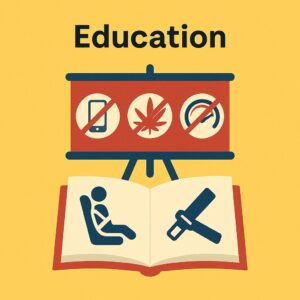 Education campaigns inform Maryland residents about the specific behaviors causing crashes in their state. These aren’t generic “drive safely” messages; they target the actual causes of traffic deaths in Maryland.
Current education priorities include:
Educational efforts also address specific communities and geographic areas where crash data shows the greatest need.
Attorneys handling motor vehicle accident cases emphasize that Maryland’s hands-free driving law creates clear liability standards in distracted driving crashes, making education about these laws essential for all drivers.
When crashes happen despite prevention efforts, rapid emergency response can mean the difference between life and death. Maryland’s plan includes improvements to emergency medical systems, trauma care, and coordination between first responders.
Emergency response improvements include:
Maryland’s crash data reveals six categories that account for the majority of traffic deaths and serious injuries statewide:
The Problem: Distracted driving now causes more crashes than it did before smartphones became common. Maryland’s hands-free driving law prohibits holding phones while driving, but distraction goes beyond just texting.
Maryland’s Approach: The state defines three types of distraction:
Education efforts focus on helping drivers understand that even hands-free phone conversations can be cognitively distracting during complex driving situations.
The Problem: Impaired driving causes about one-third of all traffic deaths in Maryland. This includes alcohol, illegal drugs, prescription medications, and increasingly, marijuana impairment.
Maryland’s Approach: The state uses multiple strategies:
Maryland also supports ride-sharing programs and public transportation improvements that give people alternatives to driving while impaired.
The Problem: Many Maryland roads were built decades ago when safety standards were less stringent and traffic volumes were much lower. These older roads often lack modern safety features. High-volume freight corridors remain especially dangerous, making the work of experienced Maryland truck accident attorneys critical when crashes involve commercial vehicles.
Maryland’s Infrastructure Priorities:
The state prioritizes improvements at locations where people have already been killed or seriously injured, ensuring that tragedy doesn’t repeat itself.
The Problem: While Maryland has relatively high seat belt usage (around 90%), certain groups and geographic areas have lower compliance rates. Unbelted occupants are much more likely to die in crashes.
Maryland’s Approach:
The state recognizes that seat belt usage isn’t just about individual choice—factors like education, income, and cultural attitudes all influence compliance rates.
The Problem: Maryland’s growing urban areas have seen increasing pedestrian fatalities, particularly along busy roads that weren’t originally designed to accommodate foot traffic safely.
Maryland’s Protection Strategies:
Urban planning increasingly focuses on creating environments where people can walk and bike safely, recognizing that these activities benefit public health and reduce traffic congestion.
Safer street design also reduces the risk of serious crashes for cyclists, and our Maryland bicycle accident lawyers represent injured riders who are often the most vulnerable on the road.
The Problem: Even small increases in speed dramatically increase both crash risk and injury severity. A pedestrian struck by a vehicle traveling 20 mph has about a 5% chance of wrongful death, but that increases to about 85% when the vehicle is traveling 40 mph.
Speeding is also a frequent factor in crashes involving rideshare drivers under pressure to complete trips quickly. Our Maryland Uber accident lawyers help victims hold negligent rideshare companies and drivers accountable.
Maryland’s Speed Management Strategies:
The state recognizes that speed limits alone don’t control speed; road design has a much greater influence on how fast people actually drive.
Maryland maintains detailed databases of every reported crash in the state, including information about location, time, weather conditions, vehicle types, driver actions, and injury severity. Transportation safety professionals analyze this data to identify patterns that might not be obvious otherwise.
Examples of data-driven insights:
This analytical approach helps Maryland invest limited resources where they can prevent the most deaths and serious injuries, rather than making improvements based on complaints or political pressure.
Maryland’s Strategic Highway Safety Plan anticipates how emerging transportation technologies will impact road safety over the next decade.
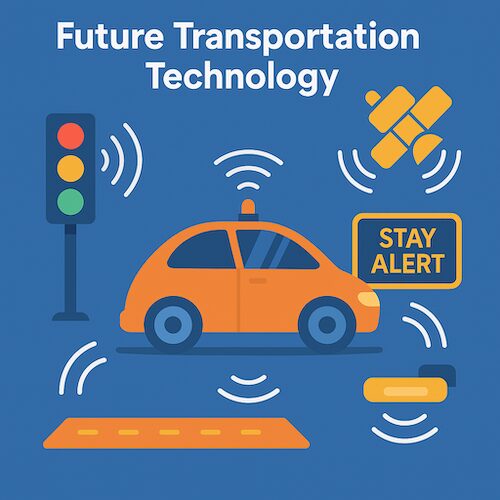 Connected vehicles can communicate with each other and with roadway infrastructure to prevent crashes. For example, a connected vehicle could warn drivers about stopped traffic ahead, even around curves where they can’t see the hazard.
Autonomous vehicles promise even greater safety benefits by eliminating human error, which causes about 94% of serious traffic crashes. However, the transition period when both traditional and automated vehicles share roads will require careful management.
Maryland is preparing its infrastructure to support these new technologies:
However, these technologies will take years to deploy widely, so Maryland’s current plan focuses primarily on proven safety countermeasures.
Achieving zero traffic deaths requires more than state government action. Maryland’s plan includes ongoing engagement with:
Regular public meetings and online feedback systems help maintain community engagement throughout the Vision Zero initiative.
Maryland tracks multiple metrics to assess its progress toward the 2030 goal:
Primary Measures:
Leading Indicators:
Annual progress reports provide public accountability and help identify areas where additional focus is needed. The state also compares its performance to other states with similar Vision Zero commitments, learning from successful approaches implemented elsewhere.
Achieving zero traffic deaths by 2030 represents an ambitious goal that faces several realistic challenges:
Despite these challenges, Maryland’s comprehensive, data-driven approach provides a realistic framework for making substantial progress toward zero deaths, even if perfect success proves difficult within the 2030 timeframe.
Maryland’s Vision Zero initiative creates benefits that extend beyond car crash prevention:
Maryland’s leadership in comprehensive traffic safety planning helps establish the state as a model for other jurisdictions. The lessons learned from Maryland’s Vision Zero implementation—both successes and challenges—contribute to the broader movement toward eliminating traffic deaths nationwide.
Several other states and dozens of cities have adopted similar Vision Zero commitments, creating opportunities to share best practices and learn from different approaches to the same fundamental goal.
While Maryland works toward achieving its Vision Zero goal, families affected by traffic crashes require experienced legal representation following serious accidents. The Maryland personal injury attorneys at Regan Zambri Long understand both the technical aspects of crash causation and the human cost of traffic violence.
Our legal team works with accident reconstruction experts, medical professionals, and transportation safety specialists to build strong cases for crash victims. We’ve seen how infrastructure failures, distracted driving, and other preventable causes devastate families, making Maryland’s Vision Zero initiative not just good policy, but a moral imperative.
If you or a loved one has been injured in a motor vehicle accident in Maryland, contact our experienced legal team for a free consultation. We understand the challenges you’re facing and can help you pursue the compensation you deserve while Maryland continues working toward zero traffic deaths.


Have you or your loved one sustained injuries in Washington DC, Maryland or Virginia? Regan Zambri Long PLLC has the best lawyers in the country to analyze your case and answer the questions you may have.