
Establishing liability and proving damages for a slip and fall accident are often the most complex parts of a premises liability case. If you sustained injuries due to a dangerous condition on someone else’s property in Washington, D.C., Regan Zambri Long’s slip and fall injury lawyers can help you seek the compensation you deserve. Whether you are seeking economic recovery for medical bills and lost wages, or want to secure compensation for your pain and suffering, our team is equipped to handle your case.
While the overall damages will depend on the specifics of your accident as well as the severity of your injuries and how that impacts your life in the long term, even the most seemingly minor fall can result in catastrophic losses.
That’s why it’s crucial to act quickly if you’ve been injured in a slip and fall accident. The experienced premises liability lawyers at Regan Zambri Long are ready to help you understand your options and protect your rights. Call (202) 960-4596 or contact us online today to schedule a free consultation. We charge no fees unless we win your case.
Complete this form and our team will get back to you as soon as possible







In a 2024 study recently published by the National Library of Medicine, medical costs for falls totaled more than $50 billion for non-fatal falls alone in older adults.
Though this number is staggering and can vary from case to case, knowing the documentation and evidence needed to prove the damages for a slip and fall case is critical to your settlement or verdicts success.
Before you can tally up your losses for a slip and fall accident, you need to determine liability. To do so, you need to consider all of the evidence including what condition caused your fall, did the property owner know of the danger and yet not remedy it, etc.
From there, you can begin to gather your medical exams, medical bills, etc.
MILLION
Wrongful Death Settlement
MILLION
MILLION
Wrongful Death Verdict
MILLION
Premises Liability Settlement
MILLION
Wrongful Death Settlement
MILLION
Wrongful Death Verdict
MILLION
Medical Malpractice Settlement
MILLION
Personal Injury Settlement
MILLION
Car Accident Settlement
Following a slip and fall accident, you may be able to collect both economic and non-economic damages. Economic damages are those with losses that are tied to a dollar amount while non-economic damages are those that are more subjective in value.
Economic damages you may be able to recover compensation for include:
To prove these expenses, you will need to have medical documentation, bill summaries, receipts, etc.
If you have suffered extensive injuries, non-economic damages you may be able to recover include:
To prove the economic damages you will need to gather the following information to substantiate your claim:
However, these damages are often very difficult to prove which is why a premises liability lawyer may be necessary to recover the losses you deserve.
In extreme cases of negligence, you may be able to recover punitive damages from the at-fault party.
In order to recover any compensation for your losses, you need to be able to prove liability and establish negligence.
This includes:
In both of these situations, it is important to know that you need evidence. This may be that you told your landlord that the steps were faulty, that a store owner knew it had been snowing yet didn’t clear the sidewalk, etc.
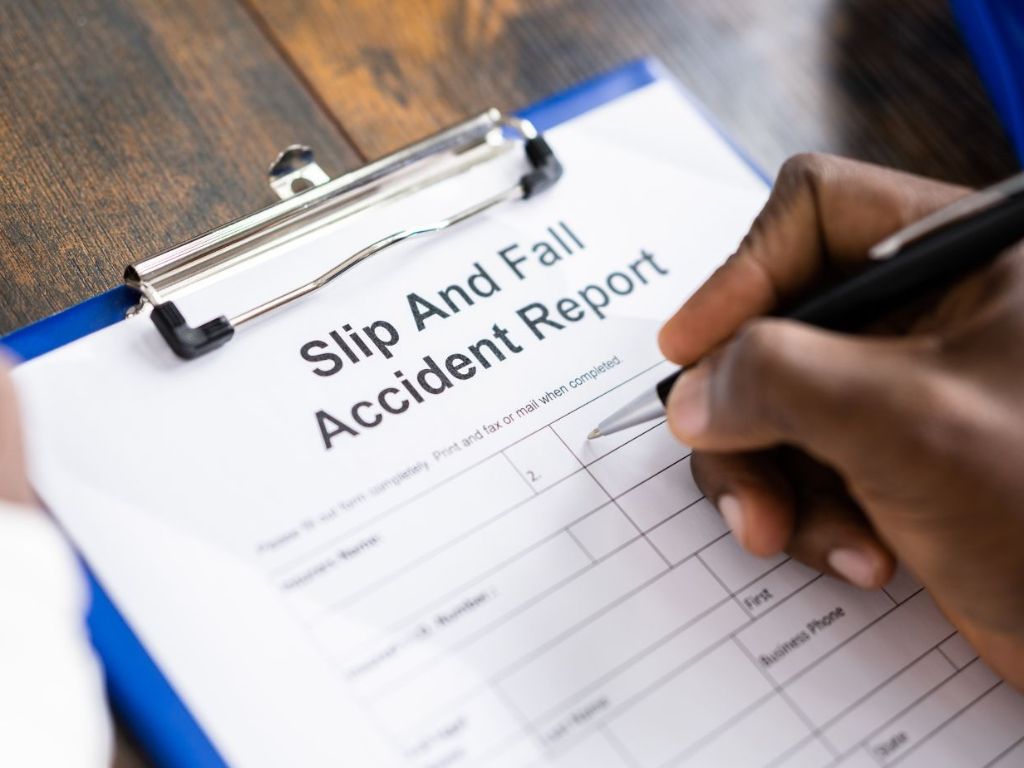
In addition to establishing liability, you will also need to produce medical documentation, accident reports, witness testimony and forms of evidence from the time of the incident.
If you sustained injuries due to a dangerous condition on someone else’s property, the premise liability lawyers of Regan Zambri Long can help you seek the compensation you deserve. Our attorneys are recognized by respected legal organizations, including Best Lawyers in America, Super Lawyers, and Lawdragon’s 500 Leading Plaintiff Consumer Lawyers, and are board-certified in civil trial law and advocacy.
We also have over four decades of experience securing compensation for injury victims throughout Washington, DC, Maryland, and Virginia, and have recovered more than $1 billion in settlements and verdicts to date.
Whether you are seeking economic recovery for medical bills and lost wages, or want to secure compensation for your pain and suffering, our team is equipped to handle your case.
If you have a slip and fall case and need the help of the experienced premises liability lawyers at Regan Zambri Long, don’t wait any longer. Call (202) 960-4596 or contact us online today to schedule a free consultation.
To prove damages, you need documentation showing your losses, including medical records, bills and receipts, accident reports, photos of your injuries, and witness statements, to substantiate both economic and non-economic impacts.
You may be able to recover economic damages like medical expenses, lost wages, transport costs, and at-home care, as well as non-economic damages such as pain and suffering, emotional anguish, or diminished quality of life.
Yes, to recover compensation you must first show the property owner or responsible party was negligent, meaning they owed a duty of care and failed to address a dangerous condition that caused your injury.
Even seemingly minor injuries can support a damages claim if they result in measurable losses or require treatment; documenting how those injuries affect your life is key.
Collecting evidence early — photos, incident reports, witness information — strengthens your case before conditions change or evidence disappears, increasing the likelihood of proving damages.
Medical records are critical because they link your injuries directly to the accident and detail the severity, treatment, and future care needs, which helps quantify your damages.
Yes, non-economic damages like pain, emotional distress, and diminished quality of life may be recoverable if you can show how the fall has impacted you beyond financial loss.
Have you or your loved one sustained injuries in Washington DC, Maryland or Virginia? Regan Zambri Long PLLC has the best lawyers in the country to analyze your case and answer the questions you may have.