What Does a Washington, DC Truck Accident Lawyer Do?
Home / Blog / What Does a Washington, DC Truck Accident Lawyer Do?
Because trucks weigh as much as 30 times more than the average passenger car, the force of the impact of a truck accident often leaves the victim battling serious injuries. In the days following the accident, victims are left to deal with grief, serious (and maybe permanent) injuries, property damage, and emotional trauma.
The truck accident lawyers at Regan Zambri Long can take the weight of the legal process off your shoulders. They will investigate the accident, the truck driver, and the trucking company. They will gather evidence from the police report and speak to witnesses who were on the scene of the accident. Finally, they will negotiate with the insurance companies on your behalf to ensure you get the highest settlement possible. Regan Zambri Long offers free consultations, and they do not get paid unless a settlement is reached in your favor. Contact the expert Washington D.C. truck accident lawyers today for your free consultation and let them help you move on with your life as soon as possible.
How will a truck accident attorney gather evidence for my claim and find the responsible party?
The biggest piece of the puzzle in a truck accident claim is to determine the party responsible for the accident. The parties who could be liable for the accident are:
The truck driver: If the driver was driving recklessly – speeding, driving while distracted, drowsy driving, or driving while intoxicated – then the fault would lie with the driver. The Regan Zambri Long truck accident lawyer would file a claim against the driver, the driver’s employer, and their insurance provider.
The trucking company: If the accident happened because the truck was poorly maintained, then the defendant in your claims case would be the trucking company. It’s their job to make sure their trucks are safe before sending them on the road.
The cargo loader: If the truck accident happened because cargo fell off the truck, then the claim could be against the cargo loader, who didn’t do their job properly and made the D.C. roadways unsafe for other travelers.
The city or municipality: It was reported that Washington D.C. has a particular problem with potholes. Washington D.C., Virginia, and Maryland are hubs for trucking routes, so if the driver swerved to avoid a pothole and caused an accident, then the fault could be with the city who did not maintain the roads for its citizens.
The Regan Zambri Long truck accident attorney will also be able to gather evidence that will come in from multiple sources. Trucking companies follow specific laws, so after an accident occurs, the Federal Motor Carrier Safety Administration, the Occupational Safety and Health Administration, and other federal agencies will do their own investigation. The lawyer will be able to be in touch with personnel from those agencies, along with the police department that responded to the accident, and the multiple insurance companies involved. Contact Regan Zambri Long today to have an experienced truck accident lawyer handle every detail of your claim so you can focus on a complete recovery.
Are Washington, DC, trucking laws different from passenger vehicle laws?
Trucking companies and drivers are subject to specific laws and regulations by the Federal Motor Carrier Safety Administration (FMCSA). These laws and regulations include:
Regular inspections and maintenance are required for each truck before trips in order to lessen the risk of accidents.
The Regan Zambri Long truck accident lawyers know the ins and outs of the national trucking laws. They also know laws specific to Washington D.C., including the trucking routes and restrictions. They will use their expertise to build your case so you receive the highest amount of compensation possible.
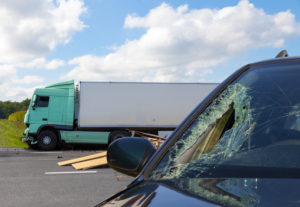
Unfortunately, trucking accidents have been going in an upward trend since the early 2000’s. The number of people who died in trucking accidents in 2019 was 31% higher than in 2009. The truck accident attorneys at Regan Zambri Long do not shy away from tough cases. They prepare every claim as if it’s going to trial. They have the financial backing to take on large trucking companies and their insurance providers. With Regan Zambri Long, you can rest assured that the truck accident lawyer will see your case until the very end and work diligently to get you the compensation you deserve.

Share This Article:
About the Author
Patrick M. Regan, Esq.
Patrick Regan is a board certified personal injury lawyer and a founding partner at Regan Zambri Long. His practice is devoted to helping those who suffered catastrophic injuries in car accidents, truck accidents, Metro accidents, and medical malpractice. Over his nearly 40-year career, Patrick has obtained some of the most significant jury verdicts in the history of Washington, DC on behalf of injured victims. Patrick is licensed to practice law in Washington, DC, Virginia, and Maryland. He received his B.A. at Hamilton College and his J.D. at the Columbus School of Law at the Catholic University of America.
Have you or your loved one sustained injuries in Washington DC, Maryland or Virginia? Regan Zambri Long PLLC has the best lawyers in the country to analyze your case and answer the questions you may have.
Cookie Consent
We use cookies to improve your experience on our site. By using our site, you consent to cookies.
Cookie Preferences
Manage your cookie preferences below:
Essential cookies enable basic functions and are necessary for the proper function of the website.
Name
Description
Duration
Cookie Preferences
This cookie is used to store the user's cookie consent preferences.
30 days
UserWay is an AI-powered accessibility widget that scans a website for WCAG and ADA accessibility issues and gives visitors on-page tools to adjust contrast, font size, navigation, and other display settings.
Set on the addtoany.com domain to remember which sharing services the visitor uses, so the share menu lists those services first.
9999 days
CallRail is a call tracking and analytics service. Its script swaps the phone numbers shown on a page and stores the visitor's referrer, landing page and session ID, so phone calls and form submissions can be attributed to the marketing source that brought the visitor to the site.
Stores a randomly generated form capture ID used to link a submitted form to this visitor session.
180 days
calltrk_session_id
Stores a randomly generated visitor session ID so that a later phone call or form submission can be matched to this visit.
180 days
calltrk_referrer
Stores the referring URL that brought the visitor to the site, so the traffic source of a phone call can be reported.
180 days
calltrk_landing
Stores the first page the visitor landed on, so the page that led to a phone call can be reported.
180 days
calltrk_override_src
Stores a traffic source supplied in the page URL, used to override the detected source and start a fresh tracking session.
180 days
calltrk_google_experiments
Stores the Google experiment IDs seen on the pages visited, so a phone call can be attributed to a test variant.
180 days
calltrk_nearest_tld
Written briefly to work out the broadest domain that will accept cookies when tracking across subdomains, then removed once that check completes.
3600 days, deleted as soon as the check finishes
CleanTalk offers effective spam protection and website security solutions to enhance user experience.
Name
Description
Duration
spbc_is_logged_in
Dashboard. Flag defines if a user was logged in.
Session
spbc_firewall_pass_key
The flag defines if the Security Firewall was passed.
Session
spbc_cookies_test
Cookie to test cookies so we know that everything working properly
Session
ct_sfw_
Group of cookies used for our SpamFireWall technology.
Session
ct_
Group of cookies used for storing dynamic variables from browser
Session
ct_pointer_data
Used in order to detect spam and improve the website's security. Does not store visitor specific data.
session
apbct_
Group of cookies which are set from backend and contain information about the current user
Session
apbct_cookies_test
Сookie to validate other cookies, so they can’t be spoofed.
Session
ct_timezone
Used in order to detect spam and improve the website's security.
Session
ct_ps_timestamp
Used in order to detect spam and improve the website's security. Does not store visitor specific data.
session
ct_has_scrolled
This cookie is used to distinguish between humans and bots.
session
ct_fkp_timestamp
Used in order to detect spam and improve the website's security. Does not store visitor specific data.
session
ct_check_js
Used in order to detect spam and improve the website's security.
session
apbct_antibot
This cookie is used to distinguish between humans and bots. This is beneficial for the website, in order to make valid reports on the use of their website.
session
spbc_2fa_passed
Dashboard. Flag defines if Two-Factor Authentication was passed.
Session
spbc_log_id
Dashboard. User identification.
Session
spbc_timer
Dashboard. Time spent on the page.
Session
CloudFlare provides web performance and security solutions, enhancing site speed and protecting against threats.
The _cfuvid cookie is only set when a site uses this option in a Rate Limiting Rule, and is only used to allow the Cloudflare WAF to distinguish individual users who share the same IP address.
session
cf_use_ob
The cf_use_ob cookie informs Cloudflare to fetch the requested resource from the Always Online cache on the designated port. Applicable values are: 0, 80, and 443. The cf_ob_info and cf_use_ob cookies are persistent cookies that expire after 30 seconds.
session
__cfwaitingroom
The __cfwaitingroom cookie is only used to track visitors that access a waiting room enabled host and path combination for a zone. Visitors using a browser that does not accept cookies cannot visit the host and path combination while the waiting room is active.
session
cf_chl_rc_i
These cookies are for internal use which allows Cloudflare to identify production issues on clients.
session
cf_chl_rc_ni
These cookies are for internal use which allows Cloudflare to identify production issues on clients.
session
cf_chl_rc_m
These cookies are for internal use which allows Cloudflare to identify production issues on clients.
session
__cfruid
Used by the content network, Cloudflare, to identify trusted web traffic.
session
__cf_bm
Cloudflare's bot products identify and mitigate automated traffic to protect your site from bad bots. Cloudflare places the __cf_bm cookie on End User devices that access Customer sites that are protected by Bot Management or Bot Fight Mode. The __cf_bm cookie is necessary for the proper functioning of these bot solutions.
session
__cflb
When enabling session affinity with Cloudflare Load Balancer, Cloudflare sets a __cflb cookie with a unique value on the first response to the requesting client. Cloudflare routes future requests to the same origin, optimizing network resource usage. In the event of a failover, Cloudflare sets a new __cflb cookie to direct future requests to the failover pool.
session
cf_clearance
Whether a CAPTCHA or Javascript challenge has been solved.
session
__cfseq
Sequence rules uses cookies to track the order of requests a user has made and the time between requests and makes them available via Cloudflare Rules. This allows you to write rules that match valid or invalid sequences. The specific cookies used to validate sequences are called sequence cookies.
session
cf_ob_info
The cf_ob_info cookie provides information on: The HTTP Status Code returned by the origin web server. The Ray ID of the original failed request. The data center serving the traffic
session
Facebook Pixel is a web analytics service that tracks and reports website traffic.
Google uses cookies for advertising, including serving and rendering ads, personalizing ads (depending on your ad settings at g.co/adsettings), limiting the number of times an ad is shown to a user, muting ads you have chosen to stop seeing, and measuring the effectiveness of ads.
90 Days
FPGCLGB
Google uses cookies for advertising, including serving and rendering ads, personalizing ads (depending on your ad settings at g.co/adsettings), limiting the number of times an ad is shown to a user, muting ads you have chosen to stop seeing, and measuring the effectiveness of ads.
90 Days
_gac_gb_
Google uses cookies for advertising, including serving and rendering ads, personalizing ads (depending on your ad settings at g.co/adsettings), limiting the number of times an ad is shown to a user, muting ads you have chosen to stop seeing, and measuring the effectiveness of ads.
90 Days
_gcl_gb
Google uses cookies for advertising, including serving and rendering ads, personalizing ads (depending on your ad settings at g.co/adsettings), limiting the number of times an ad is shown to a user, muting ads you have chosen to stop seeing, and measuring the effectiveness of ads.
90 Days
_gcl_gs
Google uses cookies for advertising, including serving and rendering ads, personalizing ads (depending on your ad settings at g.co/adsettings), limiting the number of times an ad is shown to a user, muting ads you have chosen to stop seeing, and measuring the effectiveness of ads.
90 Days
_gcl_aw
Google uses cookies for advertising, including serving and rendering ads, personalizing ads (depending on your ad settings at g.co/adsettings), limiting the number of times an ad is shown to a user, muting ads you have chosen to stop seeing, and measuring the effectiveness of ads.
90 Days
Conversion
Google uses cookies for advertising, including serving and rendering ads, personalizing ads (depending on your ad settings at g.co/adsettings), limiting the number of times an ad is shown to a user, muting ads you have chosen to stop seeing, and measuring the effectiveness of ads.
90 days
__Secure-3PSID
Targeting cookie. Used to profile the interests of website visitors and display relevant and personalised Google ads.
2 years
__Secure-1PAPISID
Targeting cookie. Used to create a user profile and display relevant and personalised Google Ads to the user.
2 years
__Secure-3PSIDTS
Targeting cookie. Used to create a user profile and display relevant and personalised Google Ads to the user.
2 years
__Secure-1PSID
Targeting cookie. Used to create a user profile and display relevant and personalised Google Ads to the user.
2 years
__Secure-1PSIDCC
Targeting cookie. Used to create a user profile and display relevant and personalised Google Ads to the user.
2 years
__Secure-3PAPISID
Profiles the interests of website visitors to serve relevant and personalised ads through retargeting.
2 years
AEC
AEC cookies ensure that requests within a browsing session are made by the user, and not by other sites. These cookies prevent malicious sites from acting on behalf of a user without that user's knowledge.
6 months
ADS_VISITOR_ID
Cookie required to use the options and on-site web services
2 months
__Secure-3PSIDCC
Targeting cookie. Used to create a user profile and display relevant and personalised Google Ads to the user.
2 years
__Secure-1PSIDTS
Targeting cookie. Used to create a user profile and display relevant and personalised Google Ads to the user.
2 years
Google Analytics is a powerful tool that tracks and analyzes website traffic for informed marketing decisions.
Contains custom information set by the web developer via the _setCustomVar method in Google Analytics. This cookie is updated every time new data is sent to the Google Analytics server.
2 years after last activity
_gat
Used to monitor number of Google Analytics server requests when using Google Tag Manager
1 minute
__utmz
Contains information about the traffic source or campaign that directed user to the website. The cookie is set when the GA.js javascript is loaded and updated when data is sent to the Google Anaytics server
6 months after last activity
__utmc
Used only with old Urchin versions of Google Analytics and not with GA.js. Was used to distinguish between new sessions and visits at the end of a session.
End of session (browser)
__utmb
Used to distinguish new sessions and visits. This cookie is set when the GA.js javascript library is loaded and there is no existing __utmb cookie. The cookie is updated every time data is sent to the Google Analytics server.
30 minutes after last activity
__utmt
Used to monitor number of Google Analytics server requests
10 minutes
__utma
ID used to identify users and sessions
2 years after last activity
__utmx
Used to determine whether a user is included in an A / B or Multivariate test.
18 months
_ga
ID used to identify users
2 years
_gali
Used by Google Analytics to determine which links on a page are being clicked
30 seconds
_ga_
ID used to identify users
2 years
_gid
ID used to identify users for 24 hours after last activity
24 hours
_gac_
Contains information related to marketing campaigns of the user. These are shared with Google AdWords / Google Ads when the Google Ads and Google Analytics accounts are linked together.
90 days
Google Maps is a web mapping service providing satellite imagery, real-time navigation, and location-based information.
Registers a unique ID on mobile devices to enable tracking based on geographical GPS location.
1 day
VISITOR_INFO1_LIVE
Tries to estimate the users' bandwidth on pages with integrated YouTube videos. Also used for marketing
179 days
PREF
This cookie stores your preferences and other information, in particular preferred language, how many search results you wish to be shown on your page, and whether or not you wish to have Google’s SafeSearch filter turned on.
10 years from set/ update
YSC
Registers a unique ID to keep statistics of what videos from YouTube the user has seen.
Session
DEVICE_INFO
Used to detect if the visitor has accepted the marketing category in the cookie banner. This cookie is necessary for GDPR-compliance of the website.
179 days
LOGIN_INFO
This cookie is used to play YouTube videos embedded on the website.